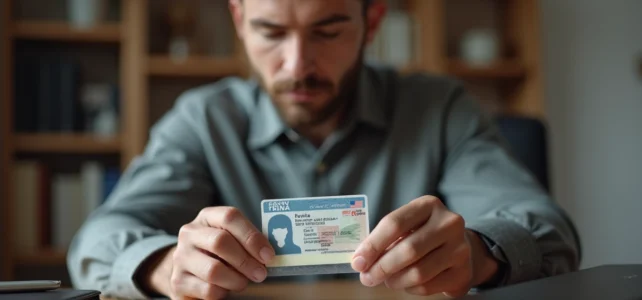
The driving license in credit card format, issued since 2013 in France, does not withstand the years spent in a wallet very well. Frayed corners, peeling lamination, fading photo: the temptation to cover the document with a transparent adhesive film is common. This seemingly mundane practice raises legal and practical questions that the ongoing digitization makes even more relevant.
Plasticized or taped driving license: what the regulations say
No text in the Highway Code explicitly prohibits protecting your license with transparent adhesive tape. The document remains valid as long as the printed information (identity, categories, dates) remains legible and the photo allows for the identification of the holder.
See also : Essential Tips and Tricks to Enhance Your Daily Well-Being
The problem arises when the tape affects legibility. Poor quality adhesive yellows within a few months, creates reflections under artificial lighting, or peels off some of the ink upon removal. In this case, the document may be considered damaged during a roadside check, which exposes you to a fine for failure to present a license in a readable condition.
Law enforcement has some discretion. A license covered with a clean and well-applied transparent film generally does not cause any issues. However, multiple layers of overlapping tape, air bubbles, or an adhesive that partially obscures the printed information can trigger a thorough check, or even a temporary retention of the document.
Further reading : How to Succeed and Grow Your Online Business: Effective Tips and Strategies
When searching for information about the taped driving license, one finds many contradictory opinions on forums. The reality lies between two extremes: it is neither formally prohibited nor without risk.

Adhesive film on the license: method and common mistakes
If you still choose to protect your license with an adhesive, the application technique is as important as the material used.
Choosing the film
Cold lamination films, sold in stationery stores as self-adhesive pouches, yield better results than regular tape. Their consistent thickness limits bubbles, and their adhesive is designed not to damage the ink over time. Standard transparent adhesive tape (office type) is the worst option: it yellows, shrinks, and pulls off the ink upon removal.
Common mistakes to avoid
- Applying the film to a wet or greasy license: adhesion will be poor and bubbles will appear within a few days
- Covering the electronic chip (present on recent licenses): thick tape can hinder the contactless reading of the document
- Overlapping multiple layers to “fix” a failed first application: each additional layer reduces legibility and gives the document a suspicious appearance
- Using wide, shiny packing tape: reflections make the photo nearly unreadable under certain lighting
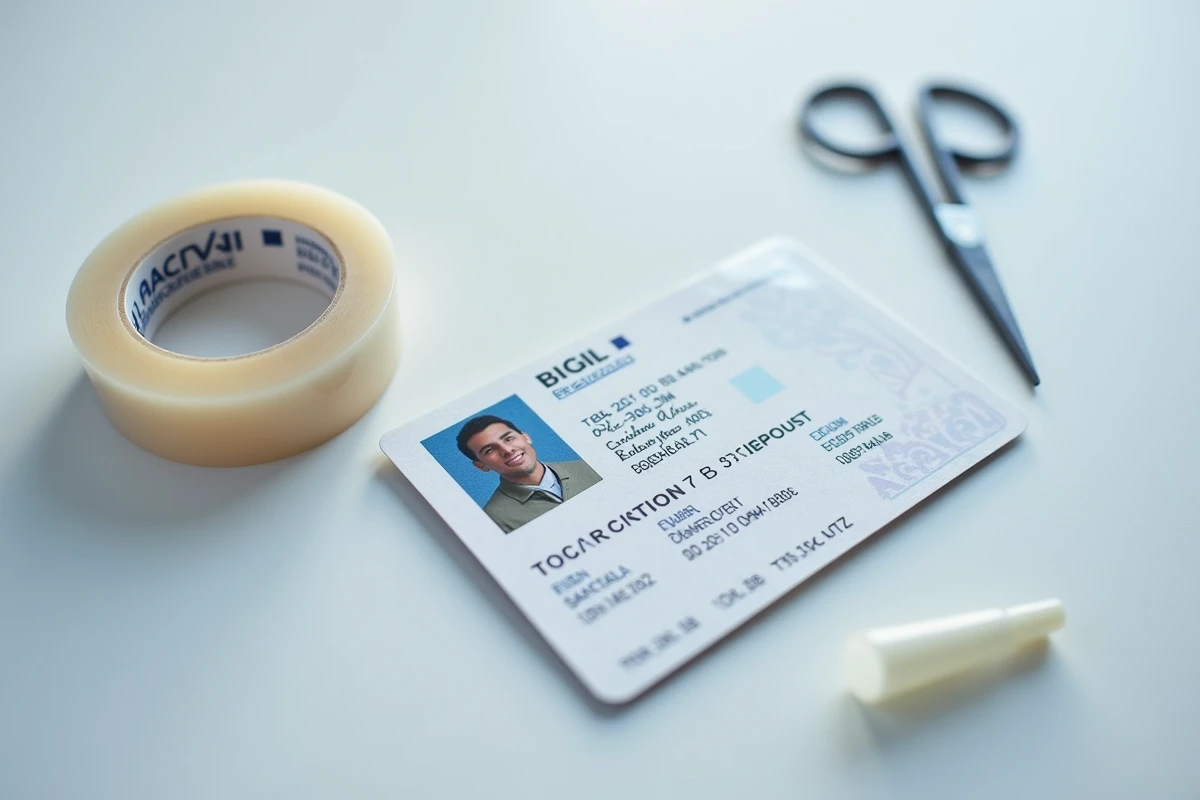
Proper application requires working on a clean and dry surface, smoothing the film from the center to the edges with a rigid card, and trimming the excess flush with the document using a new blade.
Digitization of the license: the alternative that makes tape obsolete
Since November 2024, the “Driving License” app rolled out by ANTS allows for presenting a digital certificate on a smartphone during a check. This digitized version, integrated into the France Identité wallet, was tested in 2024 and then generalized in 2025.
Adoption has been rapid. ANTS describes the proportion of candidates who now present the digital certificate during the exam as “very majority.” For long-time holders, the transition to the digital version is done via the France Identité app, without any steps at the prefecture.
This evolution changes the game for several reasons:
- The digital license does not require physical protection, which eliminates the wear issue
- Inspectors now verify identity and driving rights via ANTS/NEPH systems, not via a taped document on the dashboard
- A taped paper document has no evidential value in case of contesting a test or thorough check
On the insurers’ side, the revised general conditions in 2024-2025 specify that vehicle coverage relies on the student’s registration for the test and the presence of a qualified instructor, not on displaying a physical document.
Damaged license: when to request a duplicate rather than tape
Taping a license is a DIY reflex that postpones the problem without solving it. When the document is genuinely degraded (faded photo, lamination peeled off over more than a third of the surface, partially illegible information), the only sustainable solution remains the request for a duplicate via the ANTS website.
The procedure is entirely online. It requires a compliant digital ID photo and a valid identification document. The reception time varies depending on the periods, but the online service provides a temporary driving certificate that can be used immediately.
The duplicate has an often-overlooked advantage: it resets the physical state of the document. A new license, with its original lamination intact, can withstand several years without additional protection if stored in a hard case rather than directly in the back pocket of jeans.
Between a license covered in yellowed tape that draws attention during a check and a clean duplicate accompanied by its digital version on a smartphone, the safest choice only requires an administrative step. The question of tape on the license increasingly belongs to an era when the physical document was the only accepted proof, which is no longer the case.