The cruise control cuts out on the fast lane, the dashboard displays “Injection to be checked,” and the engine goes into limp mode. On a recent Renault diesel, this scenario often points to the DTC1525F3 error code. Before replacing anything, it’s worth understanding what this code really indicates, as the faulty part is not always the one suspected first.
ECU Reprogramming: The First Approach Workshops Test
Since 2022, several Renault dealerships and agents in France have been applying a preventive update approach for the injection ECU before any costly parts replacement. The reason is simple: a significant portion of DTC1525F3 faults disappear after reprogramming alone, without mechanical intervention.
Read also : How to Easily and Quickly Display Week Numbers on Google Calendar
On Euro 6d-Temp and Euro 6d models (Clio V, Captur II, Arkana equipped with the 1.5 Blue dCi), updates released via Renault Clip since late 2023 relax the consistency thresholds between exhaust temperature sensors and the NOx sensor. This software recalibration greatly reduces false pollution faults related to NOx post-treatment and AdBlue. You can learn everything about the Renault DTC1525F3 code by consulting the technical details of this multiplexed anomaly.
In practice, asking the workshop for the software version of the ECU before approving a quote for EGR valve or exhaust flap replacement can help avoid unnecessary expenses. If the ECU is not up to date, reprogramming alone may be enough to turn off the warning light.
See also : Decrypt tiuqyazhmizz and huflahizcisz: meaning, uses, and answers to your questions
Stuck Exhaust Flap: The Mechanical Trap of DTC1525F3
When the software update does not resolve the issue, the exhaust flap (or exhaust butterfly) remains the most common mechanical cause. This small motorized valve, located downstream of the turbo, regulates back pressure to accelerate the heating of the catalyst and particulate filter.
How the Flap Triggers the Safety Mode
The flap gets stuck due to accumulated soot. The engine ECU then detects an inconsistency between the requested position and the actual position. It interprets this anomaly as a risk to the pollution control system and triggers the DTC1525F3 code, accompanied by an immediate deactivation of the cruise control.
The cruise control is not broken. It is intentionally cut off by the ECU to limit torque variations in a context where engine management is no longer reliable. The message “Injection to be checked” reflects this overall safety measure.
Unsticking or Replacing the Flap
A mechanical unblocking of the flap, performed after removal, is sufficient in many cases. The soot is cleaned, the shaft is checked to turn freely, and it is reassembled. The cost remains moderate compared to a complete part replacement.
Feedback varies on this point: some workshops find that the flap gets stuck again after a few months if the journeys remain mostly urban. For vehicles that rarely drive on the highway, replacing it with a new part offers a more durable solution.
Boost Leaks and Faulty Sensors on dCi Engine
The DTC1525F3 can also signal a problem upstream of the flap. Burst or disconnected turbo hoses cause a drop in boost pressure that the ECU records as an engine inconsistency.
- Cracked or unclipped intercooler hose: a whistling sound during acceleration is often noticed, indicating that pressurized air is escaping before reaching the intake manifold.
- Dirty air mass meter: the signal sent to the ECU no longer corresponds to the actual flow, which distorts the injection maps and can trigger the DTC1525F3 code alongside the DTC010122 code.
- Faulty boost pressure sensor: an erratic signal is enough to switch the ECU into limp mode, resulting in power loss and jerking during acceleration.
- Battery nearing end of life: an unstable voltage disrupts the multiplexed communication between ECUs, generating phantom codes including 1525F3.
Checking the hoses and battery voltage before touching the sensors helps eliminate the simplest causes. A visual inspection of the boost circuit, with the engine running, often reveals the leak through noise or a pressure test.

Warranty and Coverage: What Changes with This Error Code
Insurers offering mechanical breakdown warranty extensions (Opteven, Icare, Mapfre Warranty) are increasingly refusing to cover interventions related to DTC1525F3 when the manufacturer’s maintenance is not rigorously documented. In plain terms, an incomplete maintenance log or untraceable off-network oil changes can serve as grounds for refusal.
For vehicles still under manufacturer warranty, the ECU update is normally covered without dispute. However, a stuck flap on a vehicle out of warranty remains the owner’s responsibility, unless a recall or technical note from the manufacturer specifically covers the component for the relevant model year.
Before heading to the workshop, it is recommended to gather maintenance invoices and check on the Renault website if a recall or technical action concerns the vehicle. This preparation speeds up the handling process and avoids back-and-forth trips.
Field Diagnosis: The Sequence to Follow
To save time when facing the DTC1525F3 code, a logical order is applied from the least expensive to the most expensive.
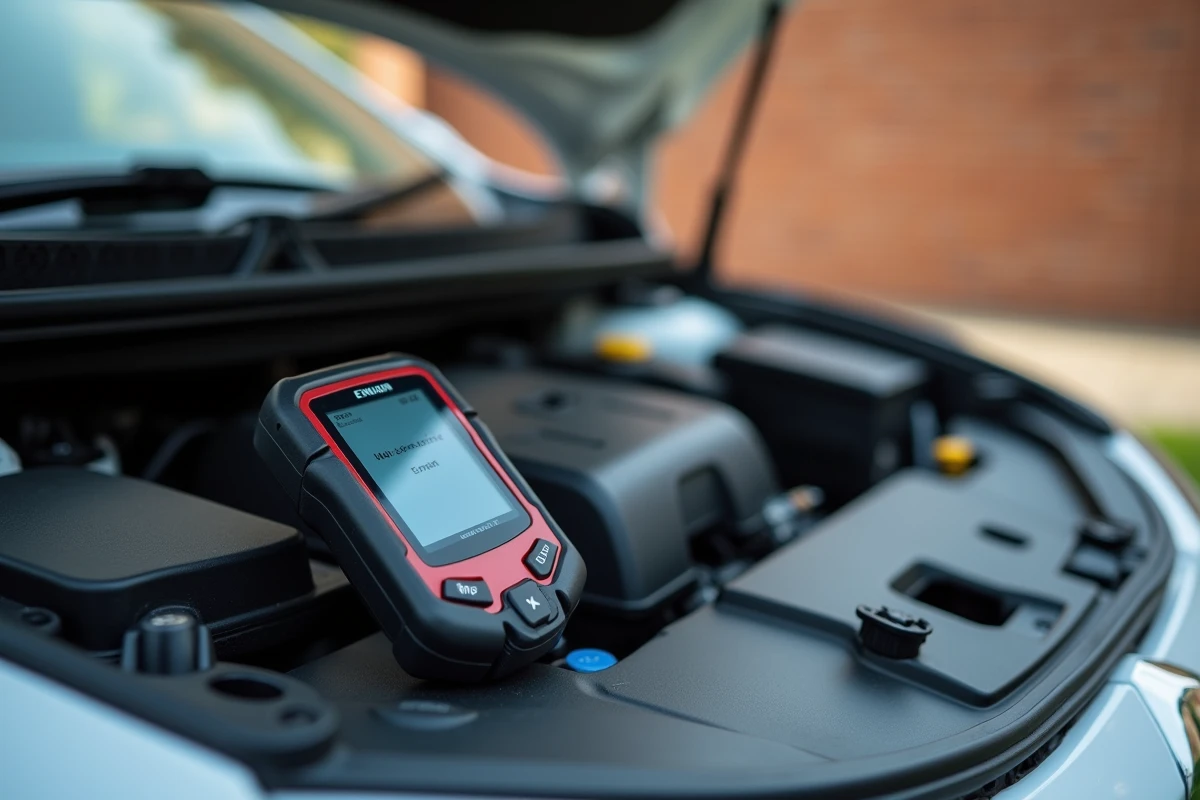
- Read the fault codes with a compatible Renault diagnostic tool (Clip, Delphi, Launch) and note all associated codes, not just the 1525F3.
- Check the software version of the injection ECU and request an update if it is not up to date.
- Visually inspect the boost circuit (hoses, clamps, intercooler) and test the battery voltage.
- Inspect the exhaust flap: removal, cleaning, manual rotation test.
- If the fault persists, move on to the sensors (mass meter, boost pressure, NOx sensor) using live values from the diagnostic tool.
This sequence avoids replacing a sensor costing several hundred euros when a hose costing a few dozen euros was the real cause. Diagnosis by elimination remains the best protection against unnecessary repairs for this type of multiplexed failure.
The DTC1525F3 is not an engine failure in itself, but a software lock that protects the mechanics. The ECU update, flap check, and boost circuit verification cover the vast majority of cases encountered on recent Renault dCi vehicles.