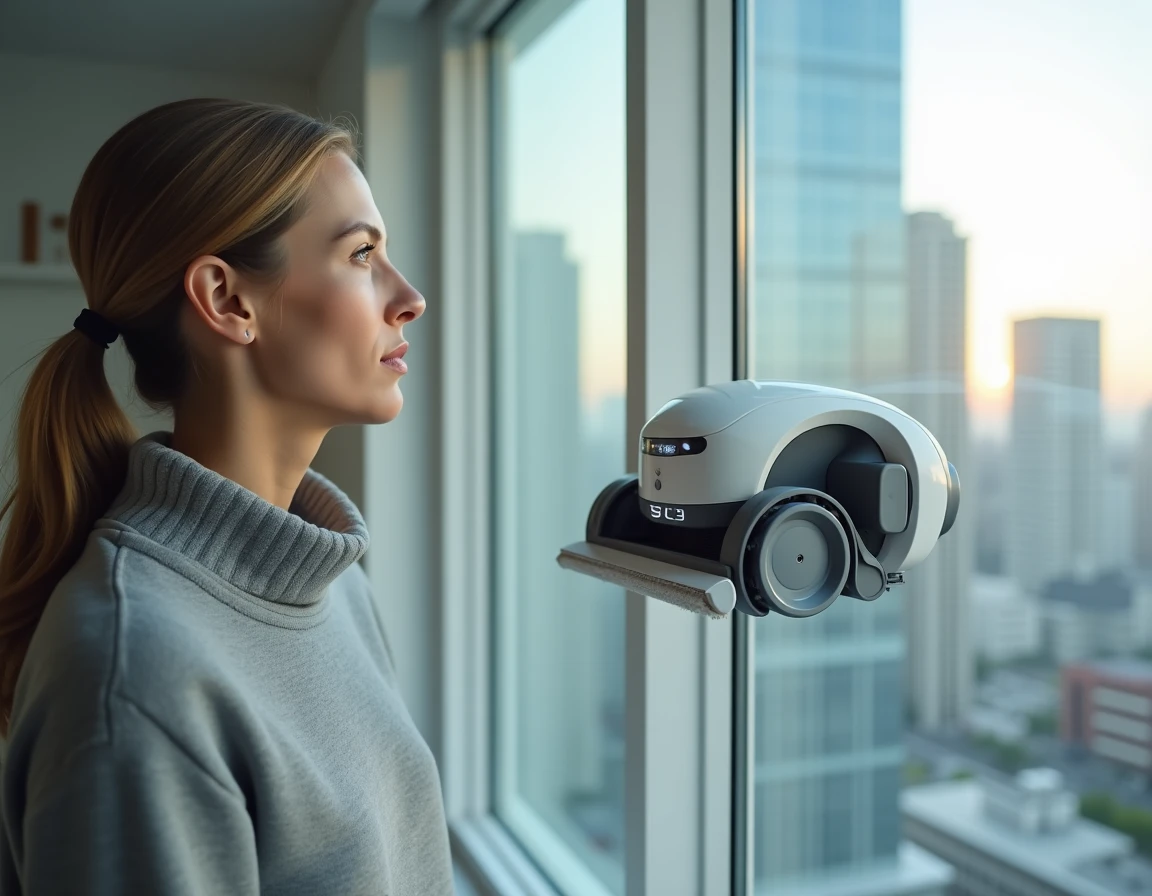
Window cleaning robots are taking an increasingly prominent place in the home appliance aisles. Their promise: clean windows with no effort, even at heights. However, comparative tests published by consumer organizations yield uneven results. Between residual streaks, mounting issues, and limitations on certain types of glazing, the overall assessment remains mixed for a category of products sold for several hundred euros.
Mounting and falls: an underestimated risk for window cleaning robots
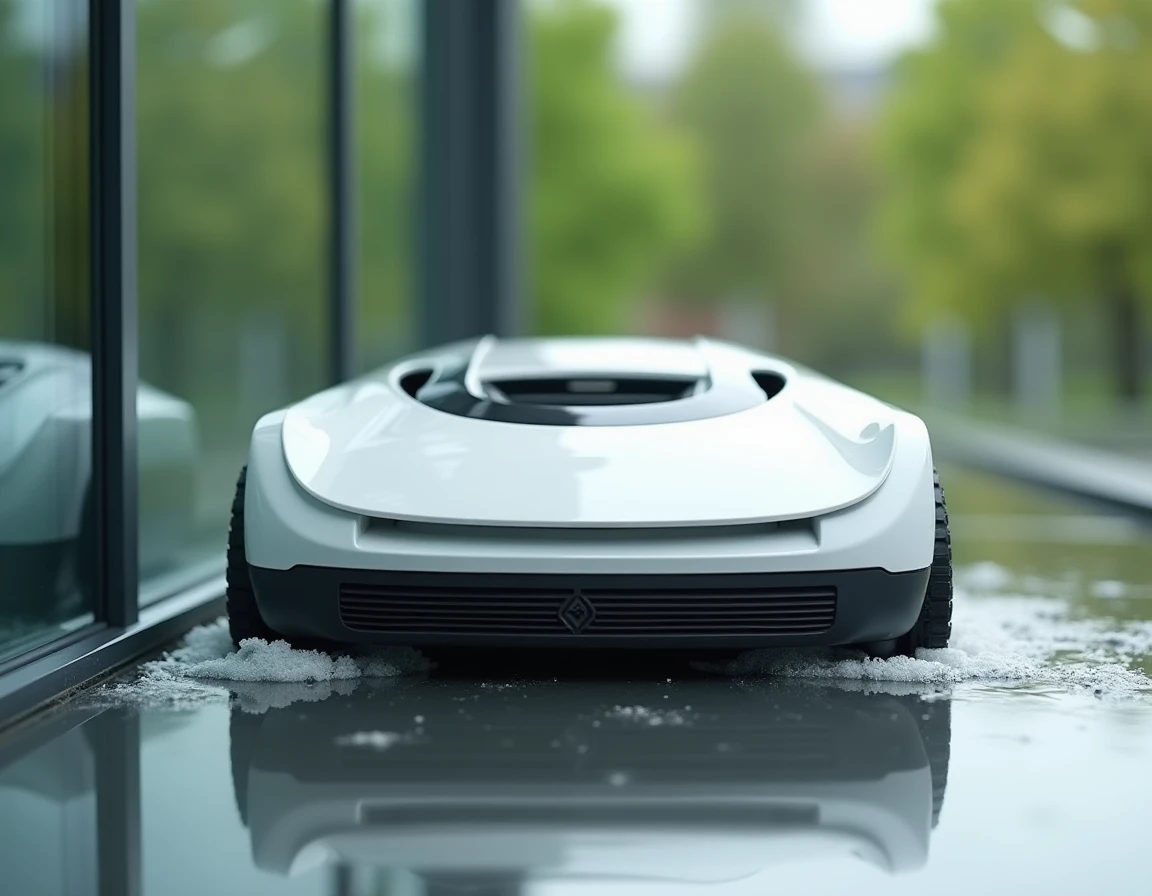
The quality of cleaning or battery life are not the only concerns. Reports from customer service and manufacturer announcements indicate an increase in cases of detachment, particularly on large glass doors or slightly curved surfaces.
When the device operates at height, above a terrace or passageway, the consequences go beyond mere material damage. Some manufacturers have responded by reinforcing their safety carabiners and revising edge detection algorithms. New testing procedures for height have also been communicated, but these improvements are recent and their effectiveness varies by model.
To assess the reliability of a model, the reviews on window cleaning robots according to UFC Que Choisir provide a valuable source. Their testing protocols incorporate safety criteria absent from product sheets.
Cleaning results: what independent tests criticize about robots
The latest comparative tests conducted by European consumer organizations yield average overall scores for the majority of evaluated models. Three recurring defects are noted.
- The edges and corners of the glass remain poorly covered. The robot fails to access them properly and leaves an uncleaned strip several centimeters wide.
- Residual streaks appear as soon as sunlight hits the surface, a problem related to the spraying system and the pressure exerted by the pads or cloths.
- Battery or spray pump failures occur during the cycle, forcing a restart of the cleaning or manual completion.
These findings contrast with the high scores displayed in retail guides. In a test pitting a motorized manual cleaner against a robot, the manual result remained superior on standard-sized windows.
Solar control double glazing and commercial showcases: poorly documented limits
The actual compatibility with certain types of glazing remains a little-covered angle in public tests. Solar control double glazing, increasingly common in recent constructions, poses a specific problem: the reflective treatment of the surface can disrupt the robot’s navigation sensors, causing erratic trajectories or unexpected stops.
Very thick or slightly curved glazing also complicates suction mounting. On commercial showcases, which often exceed the dimensions of a domestic window, the suction power of consumer models proves insufficient to keep the device in place throughout the cycle.
Manufacturers’ technical sheets rarely mention these restrictions. Field feedback varies on this point: some users achieve acceptable results on standard double glazing, while others report repeated failures on treated glazing. In the absence of a standardized testing protocol for these configurations, the available data does not allow for a definitive conclusion.
Which glazing works with a window cleaning robot
Flat, untreated surfaces of standard thickness remain the most favorable terrain. On large glass doors, results tend to improve compared to small windows, as the robot has more space for its navigation trajectories.
Conversely, any textured, curved surface or one with a solar protection film represents a risk factor, both for cleaning quality and for suction hold.
Window cleaning robot: for whom is the investment justified
The price of a window cleaning robot remains high compared to a motorized manual cleaner or a professional squeegee. The question of return on investment directly depends on the housing configuration.
The interest focuses on large, hard-to-reach glass doors. For windows located at height, on a facade without external access, the robot offers a solution that manual cleaning cannot match without specific equipment like a ladder or lift. This is the only scenario where independent tests recognize a clear advantage for the robot over manual alternatives.
For an apartment with standard-sized windows accessible at arm’s length, the calculation reverses. The setup time for the robot (securing the safety cable, preparing the cloth, pre-spraying) often exceeds the time needed to clean the window by hand.
- Large glass doors at height: the robot provides a real gain in comfort and safety for the user.
- Standard-sized windows: the time-result ratio favors manual cleaning.
- Treated or curved glazing: the risk of disappointing results remains too high to recommend purchase without prior compatibility verification.
The market is progressing, with notable improvements in navigation and safety systems. No model tested to date combines reliability, impeccable cleaning results, and compatibility with all types of glazing. Before investing, checking the type of glazing in question and the configuration of the windows remains the most useful precaution.