
Entire lineages sometimes summarize their history in a single phrase: resemblance is not negotiable, it imposes itself. Ancient words, those that traverse the ages without weakening, know how to translate these obvious truths better than any theory. It takes just one formula, repeated from generation to generation, for collective memory to seize it and embed it in everyday language.
From plush salons to public speeches, one expression stands out when it comes to naming the obviousness of family transmissions. Its longevity, attested for centuries, speaks volumes about how society views the inheritance of behaviors and traits. It sheds light on what we believe we know about lineage, resemblance, and what each era seeks to transmit or hide.
Recommended read : How to Easily Determine the Volume and Area of a Triangular Pyramid
Why do we say “like father, like son”?
In everyday language, the expression like father, like son straightforwardly refers to the physical and moral resemblance that connects parents and children. Behind these words lies the idea that traits, both good and bad, are passed down from generation to generation. There’s no escaping it: everyone inherits gestures, facial expressions, and ways of thinking, even without seeking it. Sociological researchers, just like popular wisdom, confirm this observation year after year: lineage leaves stubborn traces.
Other phrases exist, but this one has a unique evocative power. It serves to highlight, in a direct tone, the similarity between family members. A mannerism, a temperament, the same tastes for an art or a recipe: family transmission does not always hide in genes. Environment, daily repetition, imitation games—all shape resemblances and enrich this heritage.
You may also like : Understanding Shamanism in the Face of Mental Illness: Origins, Beliefs, and Symptoms
For example, we often observe that several aspects are frequently mentioned through this phrase:
- Character traits: whether it’s tenacity, humor, reserve, or enthusiasm, these particularities sometimes traverse generations without weakening.
- Habits and talents: a shared passion for reading, inherited gestures while cooking, or a professional know-how passed down informally are frequently found.
Through all this, the expression continues to mark the way we approach family transmission, both in what is obvious and in the subtle, discreet details.
From ancient origins to the current meaning of the expression
The proverb takes root as early as the 16th century when animal sayings served as a reference for thinking about kinship in the French countryside. Even then, heredity was perceived as an invisible thread connecting individuals of the same lineage. Entrusting a trade, land, or reputation within a family relied on this idea of an almost inevitable continuity.
The use of animals to illustrate lineage is not innocent: it touches on universality. Let’s mention “a good dog hunts from its breed” or, among our English-speaking neighbors, “the apple doesn’t fall far from the tree.” The same mechanism exists in Spanish, “de tal palo, tal astilla.” Each of these variations, in its own way, recalls the strength of family ties and the persistence of resemblances.
Today, this phrase goes beyond the strict family circle. It is heard whenever it comes to the transmission of values, practices, or even life paths. Suddenly, the expression becomes a reference point: it states that certain inheritances withstand the test of time, blending heredity, common culture, and the desire to replicate or escape the footsteps of the ancestors.
Concrete examples: when and how to use this phrase in everyday life
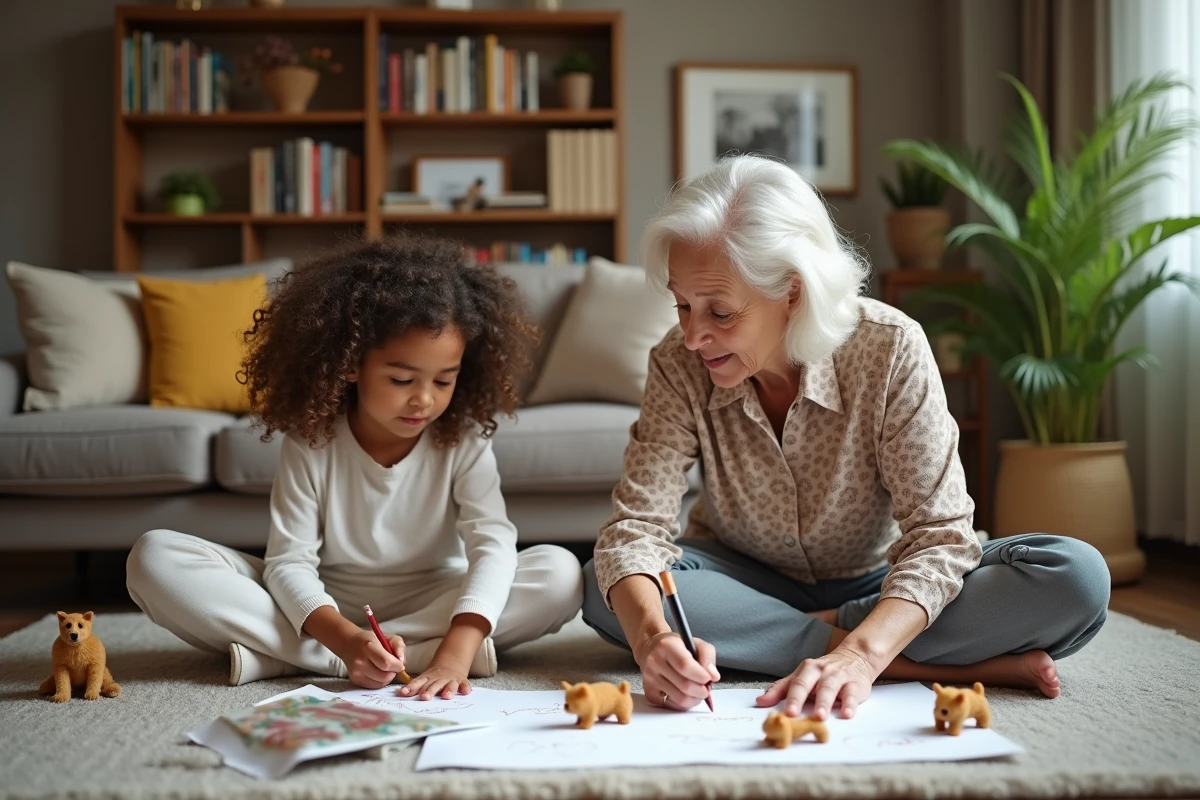
This phrase slips into many conversations, both simple and remarkably effective. When a teenager reveals at the table the same curiosity for cameras as his father, it is immediately heard. When a child unconsciously repeats the precise gesture of her grandmother to prepare a dessert or fix an object, no further explanation is needed: the expression hits home. In both friendly circles and professional life, it stands out to highlight what family transmission makes evident, even inevitable.
In certain work environments, the phrase underscores the passing down of craftsmanship, a manual gift, or public commitment. It carries many nuances: sometimes tender, conspiratorial, or slightly sarcastic, it accompanies writers and columnists as they scrutinize the legacy of families.
Here are the circumstances in which it is most often found:
- Among friends, it serves to note the mimicry between close ones, between children and parents, sometimes with a burst of laughter.
- During an informal exchange, its simple statement attests to a reassuring, even expected continuity.
- In the face of unique choices or behaviors, it reminds us that even differences sometimes fit into family repetition.
Ultimately, this expression has lost none of its strength: it traverses generations, adapts to contexts, and continues to illustrate this strange mix of heredity, culture, and freedoms taken… or to be taken.