
The awakening of the child refers to all the processes by which a young brain builds its neural connections in contact with its environment. Supporting this awakening is not just about accumulating toys or chaining workshops. Research in child development shows that the quality of the relationship between the parent and the child weighs more on well-being than the quantity of activities offered.
“Serve and return” interactions: the most underestimated awakening mechanism
According to UNICEF and WHO, “serve and return” interactions are among the most powerful levers for cognitive awakening and the protection of the child’s future mental health. The principle is simple: when a baby makes a sound, a look, or a gesture, the adult responds appropriately, like in a relational ping-pong exchange.
You may also like : Tips and practical advice for transforming and maintaining your garden all year round
This regular back-and-forth strengthens the neural circuits related to language, emotional regulation, and memory. The WHO places these interactions on the same level as nutrition or sleep in the early years of life.
In practical terms, this means that a parent who responds to their baby’s babbling by looking them in the eye, naming what they observe, or imitating their sounds is already doing significant awakening work. To discover tips on Le Petit Blog de Maman, this relational approach serves as a guiding thread that runs through all stages of development.
You may also like : Essential Tips and Tricks to Enhance Your Daily Well-Being
The trap would be to believe that these exchanges must be constant or intense. A few minutes of attentive presence, spread throughout the day, are enough to nourish this mechanism. Regularity matters more than duration.
Free play and attentive presence: what research really recommends
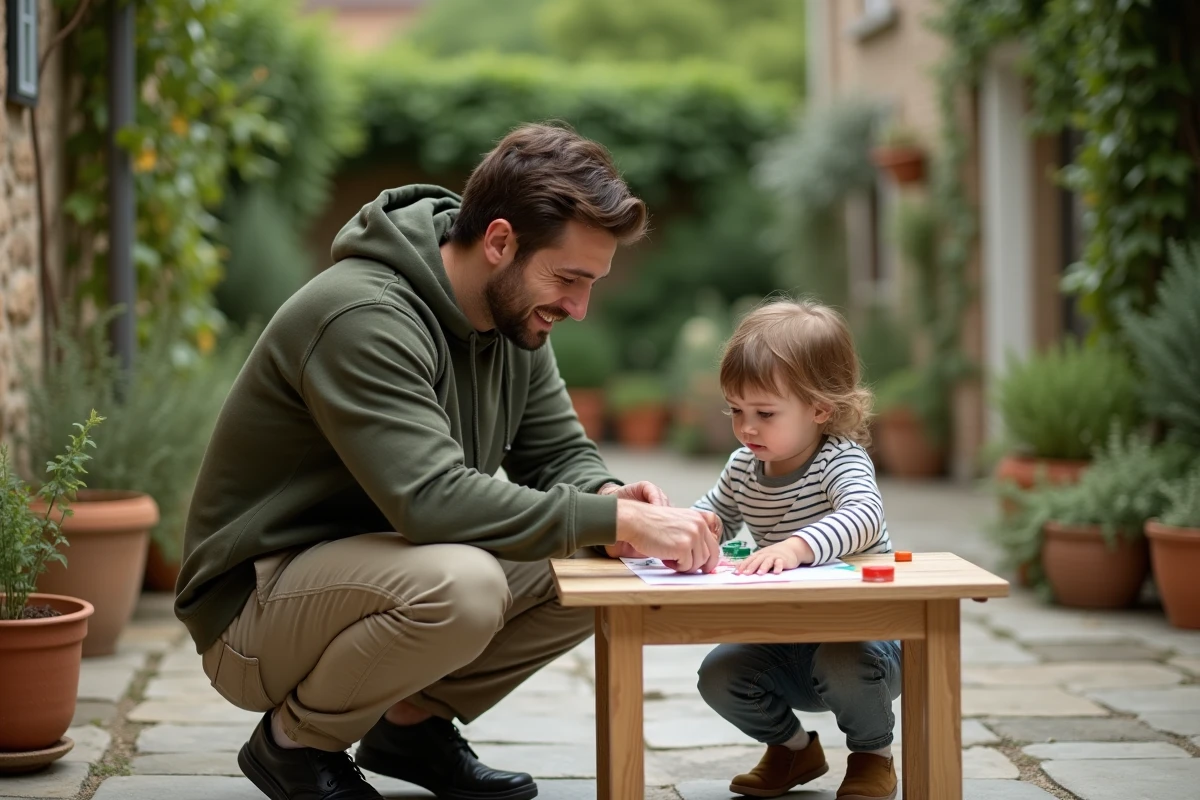
The Center on the Developing Child at Harvard University has highlighted a finding that puts many parenting practices into perspective: shared free play is more predictive of well-being than specialized toys or workshops. In other words, a child stacking cardboard boxes with an available adult progresses more than a child alone with a sophisticated educational toy.
Free play refers to any non-directed activity in which the child chooses what to explore. The adult observes, accompanies, sometimes prompts, without imposing rules or objectives. This framework fosters creativity, problem-solving, and self-confidence.
What distinguishes attentive presence from passive supervision
Being in the same room is not enough. Attentive presence involves getting down to the child’s level, commenting on what they are doing (“you put the red cube on top”), and following their pace rather than proposing a predefined activity.
This posture requires conscious effort, especially when fatigue accumulates. Ten minutes of fully shared free play is better than an hour of distracted cohabitation.
Parent well-being: a direct factor in child awakening
Several recent studies in pediatrics and mental health show that the child’s well-being is strongly correlated with the parent’s mental health. Postpartum depression, anxiety, or parental burnout increase the risks of emotional disorders in the child, even when the material environment is favorable.
This link is often overlooked in parenting guides that focus exclusively on the child. Taking care of oneself is not a luxury: it is a direct condition for the quality of daily interactions.
Identifying warning signs in the parent
Some indicators deserve special attention:
- A persistent irritability during interactions with the child, even in trivial situations like dressing or mealtime
- A feeling of emotional disconnection, the impression of “going through the motions” without feeling pleasure in the exchange
- A fatigue that does not improve despite acceptable sleep, often linked to excessive mental load
- The gradual avoidance of play or cuddle moments, replaced by screens or solitary activities for the child
These signals are not parental failures. They indicate that a rebalancing is necessary, sometimes with the help of a health professional.
Daily environment and lifestyle: building a stable framework for awakening
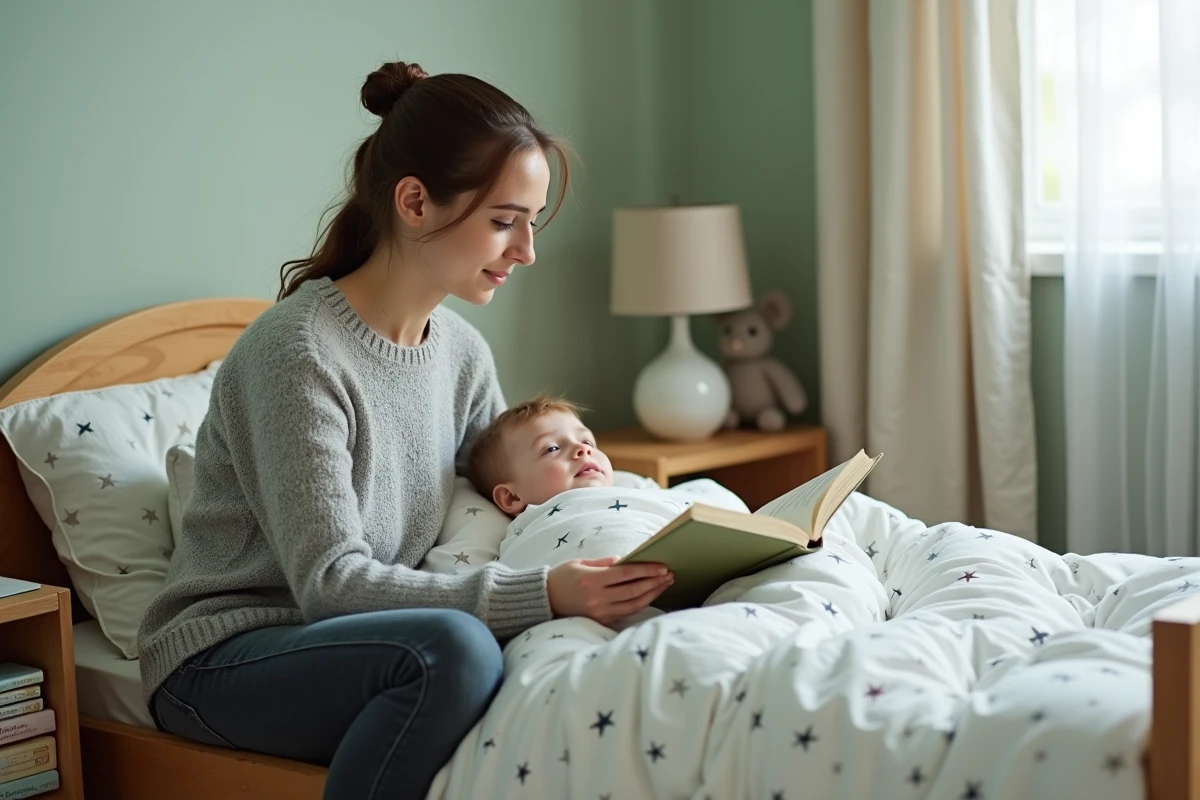
A favorable environment for the child’s awakening rests on two pillars: emotional security (predictability, rituals, consistent responses) and the freedom to explore (access to varied objects, the possibility to touch, manipulate, taste).
The rhythm of life structures this exploration. A child who eats, sleeps, and plays at relatively stable times develops a sense of security that frees their attention for learning. Disruptions in rhythm (travel, moving, changes in childcare) can temporarily reduce their curiosity, which is normal.
Choosing the right stimuli without overwhelming
The temptation to multiply toys, activities, and sensory stimuli can produce the opposite effect of what is sought. Excessive stimulation tires the nervous system and makes the child irritable.
- Offer a limited number of accessible toys and carry out regular rotations rather than leaving everything available all the time
- Alternate active times (going to the park, floor play) and calm times (reading, observation, soft music)
- Leave periods without scheduled activity, during which the child can simply be bored and invent
Boredom, far from being a problem, is a driver of autonomy. A child who learns to occupy themselves for a few minutes develops self-regulation and creativity skills that directed activities cannot replace.
The awakening and well-being of a child are built less in spectacular activities than in the ordinary quality of daily exchanges. Responding to a gaze, following the child’s pace, accepting not to optimize everything: these simple gestures remain, according to current research, the most effective.