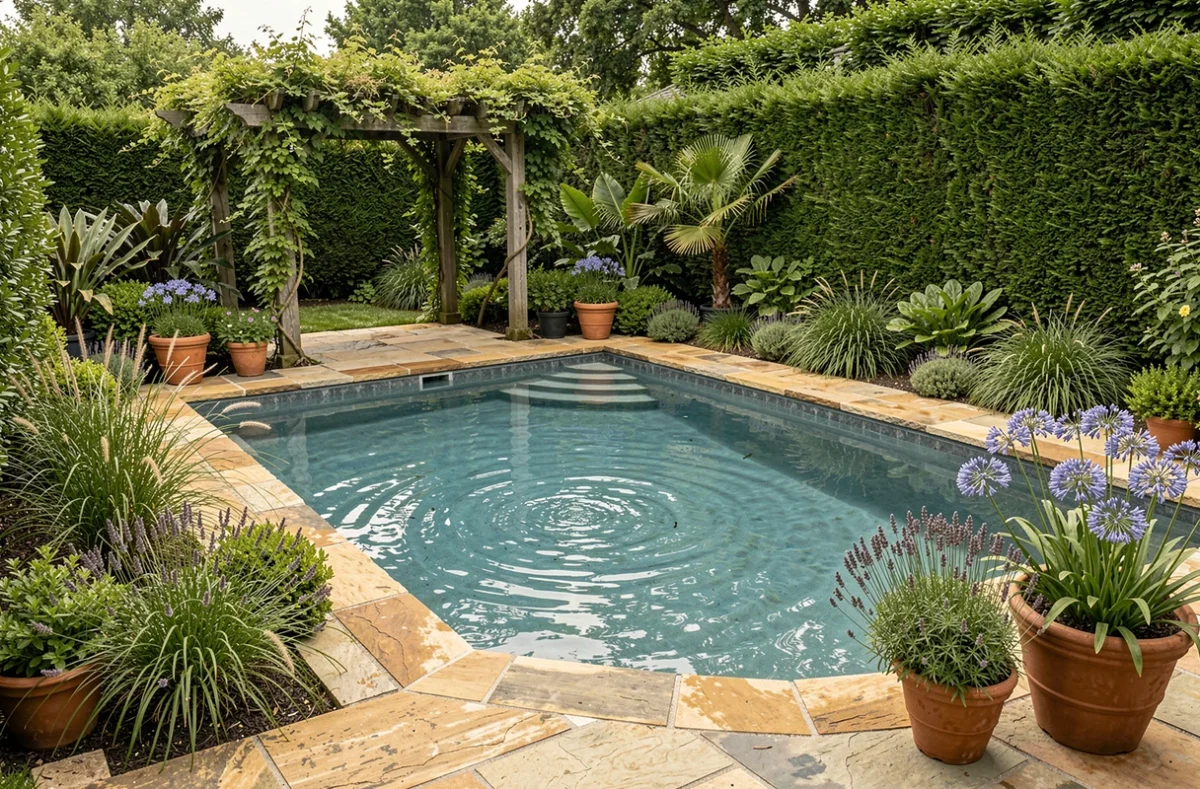
A well-placed pond in a garden is not enough to create a space where one wants to linger. What makes the difference is how the landscape, materials, and plantings interact with the water. Here are ten practical tips for successfully landscaping around your pool, taking into account often-overlooked technical constraints.
1. Check the PLU before designing any flowerbed
Have you ever noticed that some terrace or mineral beach projects need to be revised afterward? This is often because the Local Urban Planning Plan imposes distances from property boundaries, regulates the footprint, or protects infiltration surfaces.
Consult your municipality’s PLU before making any decisions. Local rules may be stricter than national regulations and can alter the positioning of your flowerbeds, terraces, and fences. A quick check at the town hall takes little time and avoids costly revisions.
To deepen your thinking, landscaping pool tips detail the design steps from choosing the site to the final plant finishes.
2. Integrate the safety barrier into the landscape from the plan
An in-ground or semi-in-ground pool that is not enclosed must have at least one standardized safety device (barrier, alarm, cover, or shelter). Instead of installing a fence afterward, integrate it into the landscape composition from the design stage.
A persistent hedge combined with a safety glass panel, for example, serves the protective function while preserving the view of the pond. Safety considered from the outset becomes a design element, not an unsightly addition.
3. Choose plants that do not pollute the water
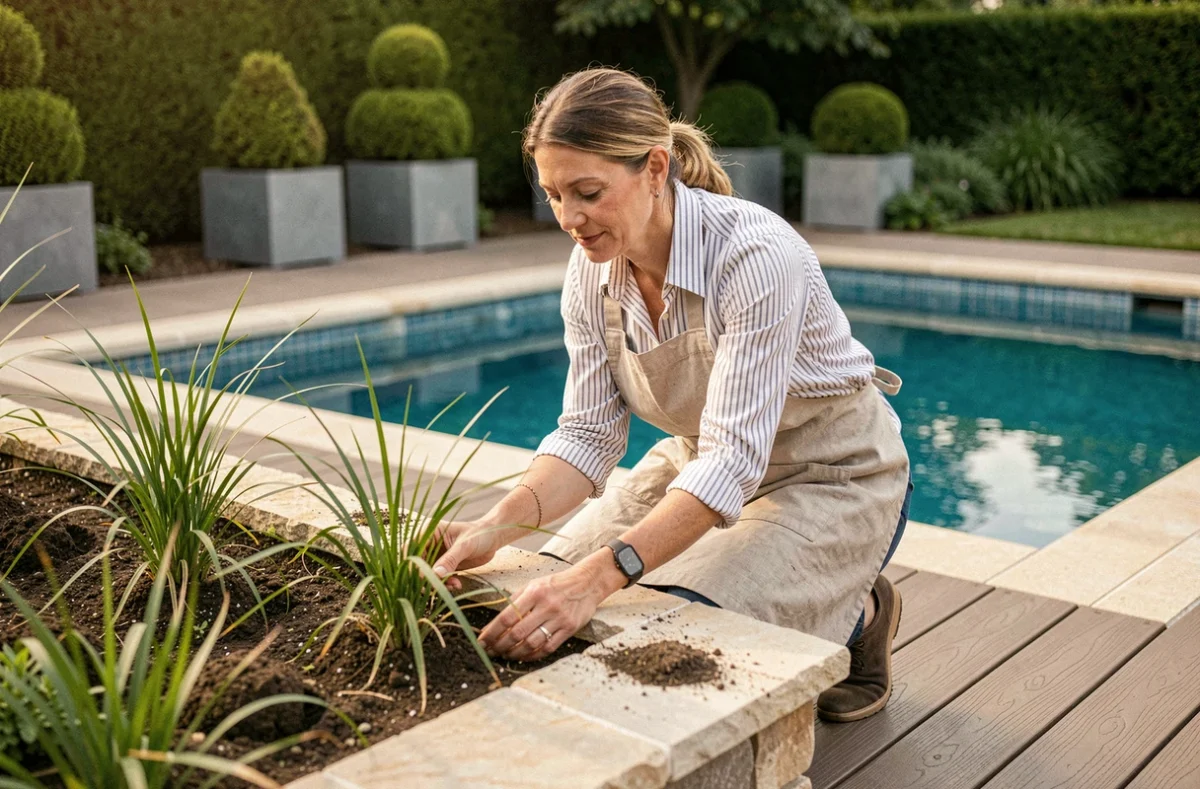
Not all plants get along with a pond. Deciduous species, fleshy-fruited plants, or those with spreading roots require constant filter maintenance and promote algae growth.
Favor persistent and low-maintenance plants:
- Ornamental grasses (miscanthus, pennisetum) add movement without shedding leaves into the water.
- Lavenders and rosemaries withstand the heat reflected by the beach and consume very little water.
- Phormiums or agaves structure the decor all year round without needing pruning.
A garden around a pool is primarily designed through elimination: eliminate problematic species, then compose with what remains.
4. Limit impermeable surfaces to manage runoff
Covering the entire perimeter with slabs or smooth concrete may seem practical, but it prevents the natural infiltration of rainwater. In case of heavy rain, runoff brings soil and debris directly into the pond.
Alternate hard beach (natural stone, composite wood) and permeable areas (stabilized gravel, foot-resistant grass). This alternation also reduces ground heat in summer, providing comfortable barefoot walking.
5. Anticipate water restrictions when choosing plants
Drought orders may limit the filling or leveling of pools. But they also affect garden watering. A resilient design relies on water-efficient plantings suited to the local climate.
Mediterranean dry gardens (santolina, cistus, euphorbia) work well both in the south and in more temperate regions subject to repeated drought episodes. Pair them with mineral mulch to retain soil moisture without frequent watering.
6. Create a structured shaded area rather than an isolated umbrella
A wind-blown umbrella often ends up folded. Why not anchor shade in the landscape? A bioclimatic pergola, a shade sail stretched between steel posts, or a tree with a spreading habit (such as a sterile plane tree) offers lasting protection.
Position the shaded area immediately next to the pond, preferably on the west side, to protect from afternoon rays. This area naturally becomes the garden lounge space, without needing to multiply furniture.
7. Pay attention to lighting to extend evening use
Poorly designed lighting turns a poolside into a parking lot. Work in layers: low lighting along pathways (solar or recessed LED lights), underwater lighting in the pool, and a few spots directed at the flowerbeds.
The goal is to create luminous relief, not to flood the area with white light. Warm tones enhance the ambiance and attract fewer insects than cool lighting.
8. Treat drainage as a landscaping constraint
Pool drainage water is considered domestic wastewater. Discharging it into nature can hold the owner liable, in accordance with articles L.211-2 of the Environmental Code and R.1331-2 of the Public Health Code.
Before landscaping an infiltration area or rain garden near the pond, neutralize treatment products and check local connection rules. This technical point conditions the layout of your flowerbeds and drains.
9. Install a pool cover to reduce evaporation
A cover (roller shutter, slatted tarp, solar cover) significantly limits evaporation and reduces the need for refill water. It also helps maintain the pool temperature and decreases the need for treatment products.
From a landscaping perspective, a roller shutter integrated into a masonry bench can serve as seating. The technical constraint becomes a piece of furniture.
10. Plan a dedicated pathway between the house and the pond
A path made of stepping stones, composite wood, or stone laid on a sand bed naturally guides circulation and protects the flowerbeds from trampling. It also prevents grass, soil, or gravel from being brought into the water.
- Wide enough for two to pass (at least the width of two side-by-side loungers).
- Non-slip material, especially if the path runs alongside the wet beach.
- Low plant borders (creeping thyme, sedum) to soften the lines without obstructing passage.
The pathway structures the entire garden: it directs the gaze, creates perspective, and connects different areas.
A successful landscaping project around a pool relies less on budget than on the coherence between regulatory constraints, material choices, and plant selection. Every decision made in advance, from the PLU to water management, avoids a much more costly correction afterward.