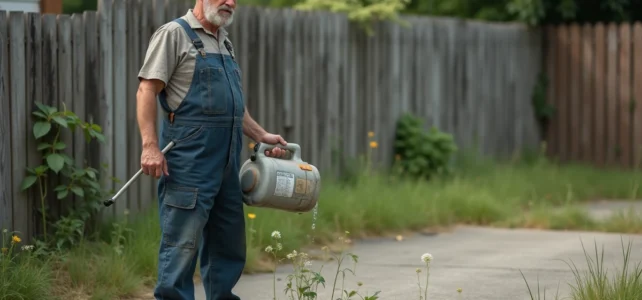
In France, the misuse of automotive products for the maintenance of green spaces exposes individuals to criminal penalties of up to two years in prison and fines of 75,000 euros. Despite the formal prohibition by regulations, some individuals continue to use coolant or AdBlue to eliminate unwanted weeds.
These substances, designed to meet strict technical requirements in the automotive sector, contain components that are toxic to wildlife, flora, and water resources. The ecological and health consequences of such practices are largely underestimated.
You may also like : How to Create a Stylish and Durable Paved Courtyard
Why are coolant and AdBlue used as herbicides?
Since the Labbé law strictly regulates the use of synthesized phytosanitary products in private gardens, an unexpected phenomenon has emerged: some gardeners are diverting automotive products, betting on their perceived effectiveness. The use of coolant as a herbicide embodies this trend of circumventing regulations, just like AdBlue, both intended for mechanics, never for nature.
This choice is easily explained: coolant, with its formidable chemical composition, destroys unwanted weeds in record time. AdBlue, a mixture of urea and demineralized water, seems, mistakenly, to offer a simple solution against the vegetation that invades pathways or terraces. These products, designed to extend engine life, find themselves propelled into risky uses, often underestimated, sometimes out of pure distrust of legal solutions, deemed too mild or ineffective.
You may also like : Why Choose a Refurbished Phone: An Eco-Friendly and Cost-Effective Choice
The gradual disappearance of mainstream chemical herbicides has opened the door to these alternative practices. However, resorting to these substances exposes individuals to penalties that can rise up to 150,000 euros in fines. The real danger often goes unnoticed: soil pollution, water contamination, loss of biodiversity… The environment becomes the silent victim of these reckless diversions.
Unknown risks: what dangers for the environment and health?
The use of coolant as a herbicide exposes the soil to compounds such as ethylene glycol, which is toxic to living beings and humans. Designed to resist freezing, it infiltrates the soil with each application, then travels with rain until it reaches the water tables and rivers. The result? Persistent pollution, invisible to the naked eye, that lingers for a long time. Domestic animals, attracted by the sweet smell of ethylene glycol, sometimes pay a heavy price, falling victim to often fatal poisonings.
AdBlue, for its part, contains 32.5% urea. When it degrades, it releases ammonia, a harmful gas for soil fauna and aquatic organisms. This transformation also causes changes in the soil pH and accelerates the eutrophication of aquatic environments, jeopardizing the fertility and balance of gardens. Essential microorganisms disappear, and biodiversity diminishes.
Pollinators, already weakened, also suffer the impact of these substances. Chemical residues accumulate in the food chain, while the management of waste from automotive products becomes an unsolvable puzzle: they are neither neutralized nor eliminated by usual channels. On each hastily treated plot, the risk settles in, discreet but lasting.

Ecological alternatives for weeding without polluting
Weeding is no longer limited to chemical products: today, other methods are emerging, combining effectiveness and respect for local biodiversity. Manual weeding, for example, remains a powerful ally. Hoes, scrapers, and market gardening hoes… These tools allow for precise garden maintenance without polluting or compromising soil life. The effort is real, but the result is clean and sustainable.
For those who want to go further, thermal weeding stands out as a solid alternative. Using steam, boiling water, or a quick pass of flame, unwanted plants are neutralized without leaving toxic traces. Easy to implement, this method is appealing for its cleanliness and speed of action.
In terms of natural herbicides, several solutions are at hand. Here are some concrete examples that comply with regulations while preserving the garden:
- Pelargonic acid, extracted from plants, acts quickly on the aerial part of weeds.
- White vinegar or baking soda, used sparingly, can treat specific areas.
- Nettle manure has earned its stripes as a recognized natural herbicide.
Complementary practices such as the establishment of ground cover plants, crop rotation, or mulching also show their effectiveness in limiting weeds. These strategies, validated by the French Office for Biodiversity, offer a solid alternative to the pollution caused by diverted automotive products.
The garden is not a chemical testing laboratory. It is a living place, where every choice leaves a mark. In the face of abuses, betting on the intelligence of ecological solutions is to preserve what matters: life, diversity, and the beauty of the landscape that surrounds us.