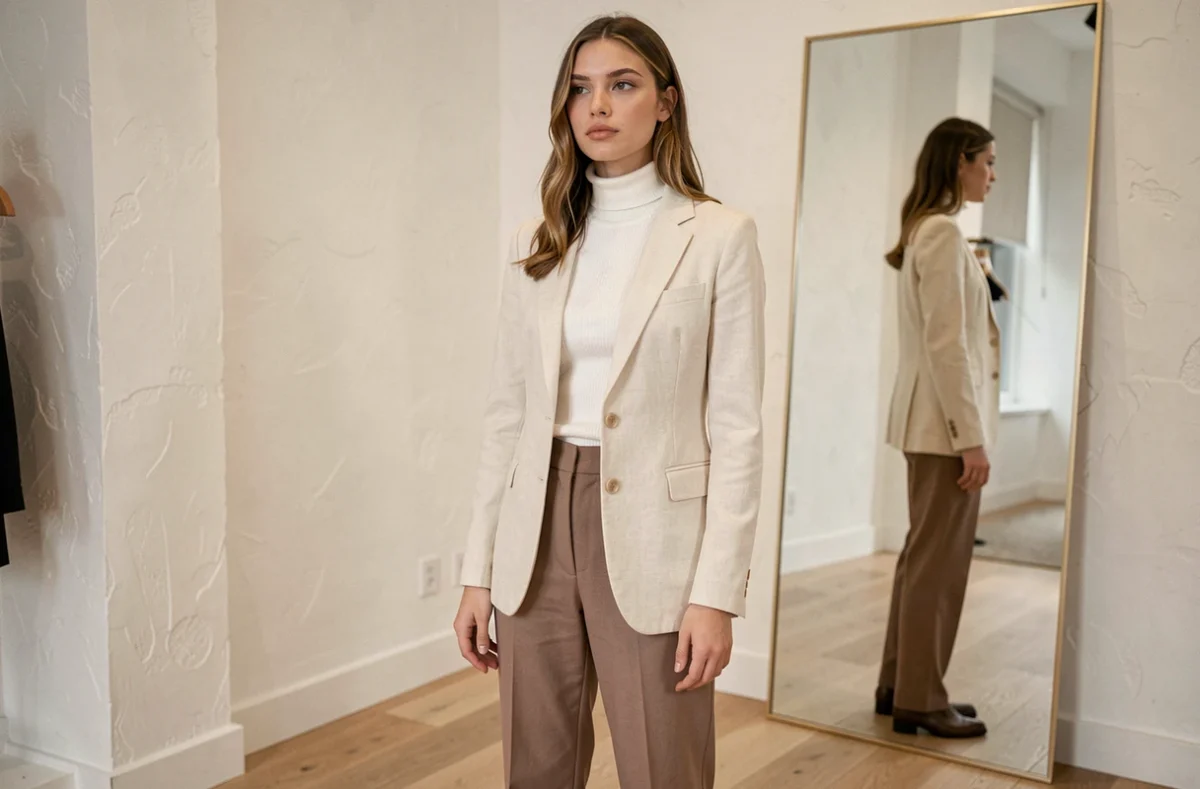
A slender body type is characterized by a fine bone structure, narrow joints and a long, lean silhouette, with little difference in width between the shoulders, waist and hips. This build typically has little visible muscle mass and long limbs in proportion to the torso. Understanding how your body is proportioned makes it easier to choose clothes whose cut and fabric truly complement your figure, rather than hanging loosely around it.
Fine bone structure and proportions: what defines a slender body type
The term “slender” comes from the Latin gracilis, meaning thin and graceful. In anthropometry, it refers to wrists, ankles and collarbones that are narrower than average, combined with limbs that are often longer than the torso.
Three visual cues can help identify this body type. The shoulders are roughly in line with the width of the hips. The waist is not very defined, giving the silhouette a vertical line (sometimes associated with the letters I or H in common body-shape classification systems). The wrists and ankles look narrow, even when the person is not particularly thin.
Be careful not to confuse a slender build with being thin. Someone can wear an average clothing size and still have a fine bone structure. This article on slender body types in French explains the difference between bone structure and body weight. It is the frame of the skeleton that determines whether a build is slender, not the number on the scale.
How fabric drapes on a slender figure: materials and garment construction
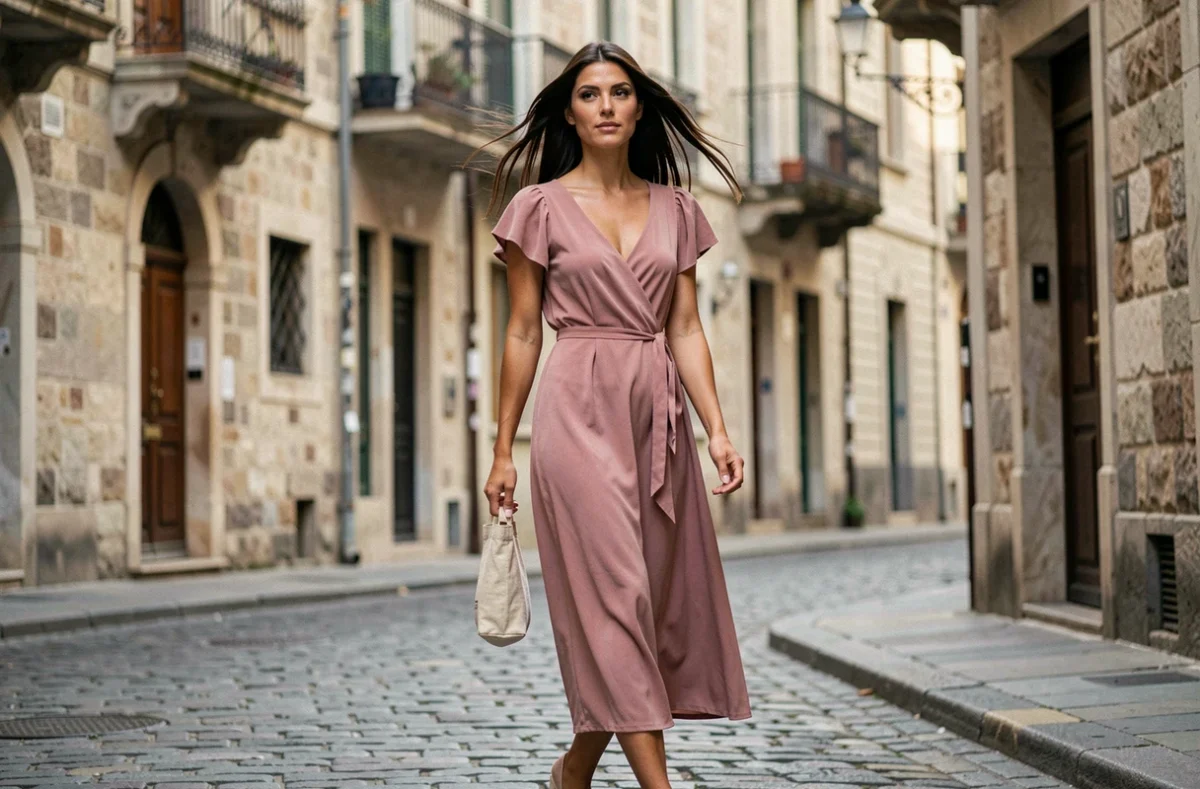
With a narrow frame, fabric weight and stiffness make all the difference. Heavy wool or thick denim can stiffen the silhouette and make it look boxy. On the other hand, jersey that is too fluid can fall flat and leave the outfit without any definition.
The best balance comes from fabrics with moderate structure. Crepe, ribbed knit, poplin cotton and lightly textured linen follow the body without flattening it. These fabrics have enough body to hold their shape while remaining soft and comfortable to move in.
Garment construction and ease
The ease built into a pattern—that is, the difference between the body’s measurements and those of the finished garment—plays a direct role. For a slender body type, too much ease can overwhelm the figure with excess fabric. Fitted or semi-fitted cuts define the body’s lines without feeling restrictive.
Darts, princess seams and shaped waist seams add structure where the frame provides little. A jacket with shoulder seams that sit right at the shoulder joint, without extending past it, gives the upper body a clear visual anchor.
Cuts and proportions that suit a long, lean silhouette
The goal when dressing a slender body type is not to “create curves” at all costs, despite what most guides say. Instead, it is about distributing volume to balance the silhouette’s natural vertical lines.
- Boat necks and square necklines visually broaden the shoulders without adding actual bulk, drawing the eye to the upper body.
- High-waisted skirts and trousers paired with a tucked-in top divide the silhouette into two distinct sections and define the waist, even subtly.
- Light layers (an open cardigan over a top, or an unbuttoned shirt over a T-shirt) add texture without bulk, breaking up the “straight line” effect while keeping the look fluid.
- Medium-scale prints (spaced horizontal stripes, checks and mid-sized polka dots) add visual movement to a flat surface, whereas a solid color can emphasize vertical lines.

What tends to work less well
Very loose oversized cuts, popular in current trends, can throw off the proportions of a narrow frame. The garment takes over the body and can look like it’s a size too big. If you like the oversized look, it is best to limit it to one piece (a loose blazer with fitted trousers, for example) to keep a defining point of reference.
Very shiny or heavy fabrics (heavy satin, voluminous faux fur) add bulk that can clash sharply with slender limbs. The contrast in volume between the garment and the body should be gradual to look natural.
Alterations and fitting: the details that make all the difference
Alterations are an underused tool. Shortening sleeves that are too long, taking in the back of a jacket or adjusting trouser hems can make a standard garment look custom-made. For a slender body type, every extra centimeter of fabric is more noticeable than it is on a broader frame, because the excess is not balanced out by the body’s volume.
During a fitting, two quick checks can help you decide. The shoulder seam should sit at the edge of the shoulder, not beyond it. The garment’s waistline should also align with your natural waist, especially on dresses and fitted jackets. A difference of just a few centimeters is enough to throw off the visual proportions.
The measurements on the label do not guarantee a good fit. Fabric stretch, the torso length allowed for in the pattern and the rise of the trousers vary from one brand to another. Trying clothes on is still the only reliable way to check, and alterations can fix what ready-to-wear brands cannot account for in every individual body.
A slender figure has the advantage of serving as a neutral canvas: most cuts work as long as the garment fits properly and the fabric has the right weight. The final habit to adopt is to check the shoulders and waist before even looking in the full-length mirror.