
The composed commentary in the French baccalaureate is based on a specific exercise: analyzing a literary text by constructing an organized reflection. First-year general students have four hours to produce a structured paper around axes of analysis, quotes, and a central question. The difficulty lies not so much in understanding the text as in the ability to show how this text produces meaning.
Moving from observation to interpretation in a composed commentary
Most papers that receive an average grade share a common flaw: they describe the text without analyzing it. Identifying a metaphor or anaphora is not enough. The examiner expects the candidate to explain the effect produced by the device on the reader and its function in the studied passage.
Further reading : How to Easily Determine the Volume and Area of a Triangular Pyramid
Let’s take a concrete example. Faced with a poem containing an accumulation of sensory images, a weak paper might write: “The author uses sensory images.” A strong paper would rather formulate: “The accumulation of tactile and olfactory images anchors the scene in a physical reality, which reinforces the contrast with the abstract dimension of the feeling expressed in the last line.”
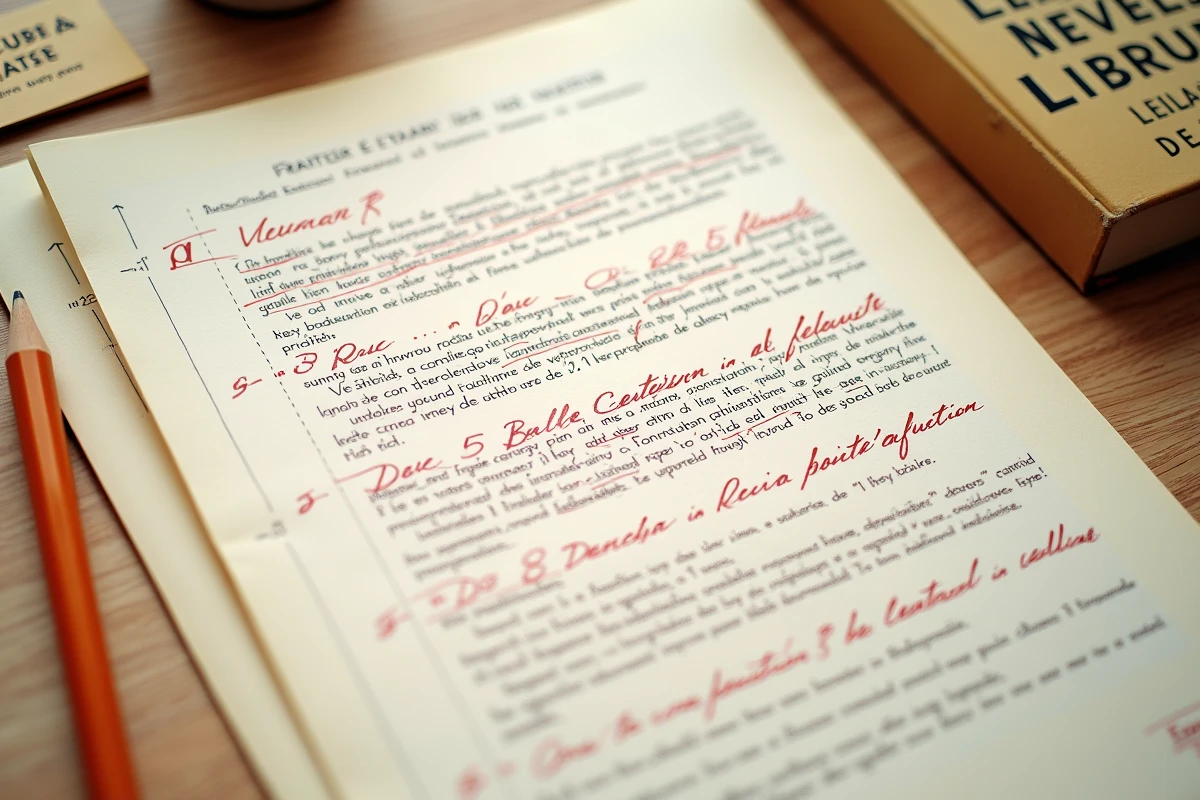
A good commentary shows how the text produces meaning, not just what it says. This distinction between observation and interpretation is the pivot of the exercise. Consulting an example of a corrected composed commentary for the baccalaureate allows for a concrete visualization of this sequence between identified device, analysis, and interpretation.
Further reading : What is the best time to take a cruise in the Mediterranean?

Building a literary commentary problem that guides the analysis
The problem is the guiding thread of the commentary. Without it, the paper becomes a succession of isolated remarks. With it, each paragraph answers a central question that gives coherence to the whole.
To formulate an effective problem, one must first identify the tension or uniqueness of the text. A text is not a uniform block: it contains oppositions, shifts in register, and breaks in tone. The problem arises from this observation.
Descriptive problem and analytical problem
A descriptive problem looks like: “How does the author describe nature?” It leads to an organized paraphrase. An analytical problem poses a real question of interpretation: “How does the description of nature serve to express an ambiguous relationship with the passage of time?”
The second formulation forces the candidate to articulate content and form in each paragraph. It guides the plan towards axes of analysis that complement each other, instead of producing juxtaposed thematic parts.
Drafting the commentary plan: axes, sub-parts, and transitions
The plan of the composed commentary generally includes two or three axes. Each axis corresponds to a major idea of interpretation of the text, not to a descriptive theme. The difference may seem subtle, but it changes the quality of the paper.
A solid axis is built starting from the devices noted in the draft. The candidate groups the devices that converge towards the same effect or meaning, then formulates a title for the axis that reflects this convergence.
- Each sub-part develops a device or a group of devices with a short quote integrated into the analysis sentence, never placed alone in quotation marks.
- The transition between two axes is not limited to announcing the next part: it shows how the first axis calls for a complementary or deeper reading.
- The last axis represents the highest level of analysis, the one that distinguishes a correct paper from a remarkable one.
A progressive plan goes from the surface of the text to its depth. The first axis may address the descriptive or narrative dimension, the second the symbolic or argumentative dimension, and the third a tension or ambiguity that only attentive readers perceive.
Introduction and conclusion of the composed commentary: what the examiner checks
The introduction of the commentary follows a precise order. It begins with a hook that situates the text in its literary context, presents the author and the work, then the studied passage. Next comes the problem, followed by the announcement of the plan.
The announcement of the plan must remain sober and readable. Two or three sentences are sufficient. Heavy formulations like “In the first part we will analyze, then in the second part we will study” can be lightened. The examiner seeks clarity, not formality.
The trap of a rushed conclusion
The conclusion summarizes the findings of the analysis, answers the problem, and proposes an opening. Papers written in the rush of the last minutes often produce a conclusion that repeats the introduction or opens with a comparison unrelated to the text.
To avoid this trap, one technique is to draft the conclusion before writing the development. The candidate thus knows exactly where they are going and can adjust the pace of their writing accordingly.
Composed commentary and dissertation: the criteria that differentiate papers in the French baccalaureate
The commentary differs from the dissertation by a fundamental requirement: everything starts from the text. While the dissertation mobilizes literary knowledge around a general question, the commentary demands an internal reading of the proposed passage. A candidate who imposes knowledge about a literary movement without linking it to the devices of the text loses points.
Examiners evaluate several specific elements:
- The relevance of the problem in relation to the text (and not to a general theme).
- The integration of short quotes into the flow of the analysis, with systematic commentary.
- The logical progression between the axes, from the most obvious to the most subtle.
- The quality of written expression, including mastery of syntax and spelling.
A composed commentary graded above average articulates each remark to an identified device and an interpreted effect. Papers that merely name figures of style without drawing conclusions remain below the expected threshold in first-year general.
The best training remains reading complete corrections, not to reproduce them, but to observe how literary reasoning unfolds, from the draft to the final writing. It is in this back-and-forth between model and personal practice that the method establishes itself.