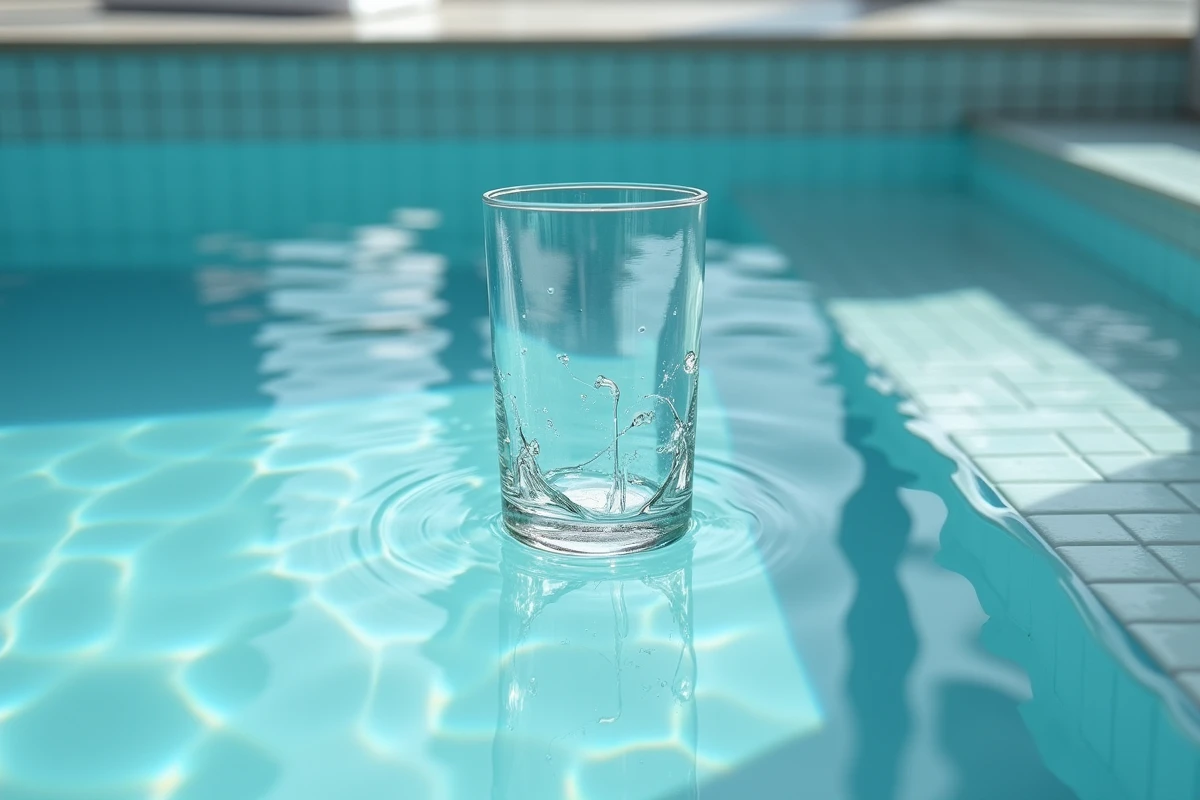
A glass, a cup, or a bottle that breaks on the pool deck can send shards into the pool. These fragments, sometimes invisible once submerged, pose a cutting risk to swimmers and can damage the lining. Knowing how to react quickly and methodically limits the damage to both the structure and the health of the occupants.
Submerged micro-fragments: why broken glass in the pool remains invisible
A fragment of glass just a few millimeters long, resting on a light blue liner or a fiberglass bottom, blends in with the light reflections. Water acts as a lens that distorts the perception of depth and masks translucent objects.
Recommended read : Tips and Inspirations for Organizing an Unforgettable Dream Trip Anywhere in the World
The problem worsens when the filtration system is running. The smallest shards circulate in the hydraulic circuit and can become lodged in the skimmer basket, pump pre-filter, or pipes. A piece stuck in a pump turbine can cause premature wear and, in some cases, a crack in the pump body.
On a soft liner, a shard resting on the bottom can eventually puncture the membrane under the weight of a swimmer stepping on it. Repairing a liner leak takes time and may sometimes require partially draining the pool. On a fiberglass shell, the risk of perforation is lower, but scratches make it easier for algae to cling in the medium term.
You may also like : Understanding the GARIP LDEF Direct Debit: Explanations and Solutions for Card Payments in Mérignac
Before even thinking about cleaning, the first action is to understand what to do in case of glass in the pool to avoid mistakes that spread debris instead of concentrating it.
Recovering glass from the bottom of the pool without worsening the situation
Cutting off the filtration immediately is the priority action. As long as the pump is running, the fragments migrate into the plumbing and become inaccessible. Once the system is stopped, the water stabilizes and the shards fall to the bottom due to gravity.
Large fragments: manual collection
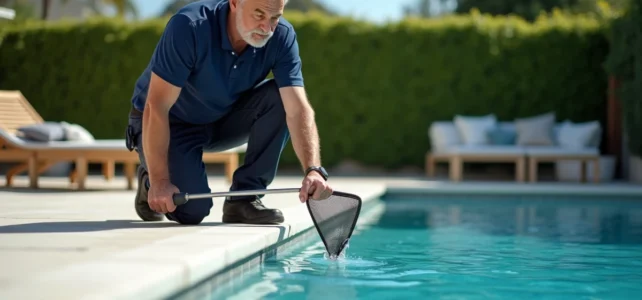
Visible pieces can be collected with a fine mesh net, ideally from the edge of the pool. Wearing closed pool shoes and thick gloves reduces the risk of cuts if a shard has migrated onto the deck or steps.
Small shards: slow suction from the bottom
For debris invisible to the naked eye, a manual pool vacuum connected in “drain” mode (direct drainage without passing through the filter) remains the safest method. The passage should be slow and methodical, band by band, starting from the presumed drop zone and then gradually widening.
- Never use an automatic robot: its rotating brushes throw the shards instead of sucking them up, and the glass damages its internal components.
- Check the pre-filter basket and skimmer after each pass, handling the contents with gloves.
- Shine a flashlight close to the surface after cleaning: micro-fragments reflect light and become detectable in the dark or at the end of the day.
Once the suction is complete, restart the filtration and check the pressure gauge. A sudden increase indicates a fragment stuck in the filter.
Damage to the lining and filtration system after a glass breakage
Glass does not just cut the skin. It also attacks the components of the pool.
On a vinyl liner, a micro-perforation causes a slow leak that is difficult to locate. Water seeps between the liner and the structure, which can destabilize a sandy backfill or promote the formation of air pockets under the membrane. Detecting the leak requires allowing the water level to drop naturally until it stabilizes, indicating the height of the hole.
On a polyester shell or a tiled concrete pool, structural risks are limited. Superficial scratches do not affect waterproofing, but they create roughness where algae and limescale cling more easily. A shock treatment with chlorine after cleaning prevents this colonization in damaged areas.
On the filtration side, a sand filter retains most of the shards in the filter bed, but these do not get eliminated by a simple backwash. Sometimes, it is necessary to open the filter and inspect the sand manually. A cartridge filter, on the other hand, is easier to rinse and visually check, but a shard can cut the filter membrane and render it ineffective.

Tempered glass or laminated glass: choosing the right protection around the pool
The majority of accidents come from ordinary glass objects brought by swimmers. Banning glassware around the pool (in favor of plastic or stainless steel containers) eliminates the main cause.
For fixed elements like safety barriers, the choice of glazing has a direct effect on the severity of an incident. Pool barriers in France must comply with the NF P90-306 standard, which imposes mechanical resistance and a minimum height. This requirement has directed the market towards two types of safety glass.
- Tempered glass fragments into small, less sharp pieces when broken, but these fragments scatter around the point of impact and can fall into the pool. Some tempered glass exposed to sunlight or significant temperature variations is prone to spontaneous breakage due to nickel sulfide inclusions.
- Laminated glass, made of two layers bonded to an interlayer film, remains in place even when broken. No shards fall into the water. This type of glazing minimizes the risk of projection.
- Tempered laminated glass combines both properties: high mechanical strength and retention of fragments in case of breakage.
For a pool fence, laminated glass offers the best protection against the scenario of breakage contaminating the pool. The additional cost at purchase is justified by the absence of emergency cleaning and liner replacement.
The most effective reflex remains daily prevention: no glass containers on the deck, laminated glass barriers, and a fine mesh net always accessible next to the technical room. A forgotten glass fragment at the bottom of the pool can remain invisible for weeks before causing a cut or a leak.